
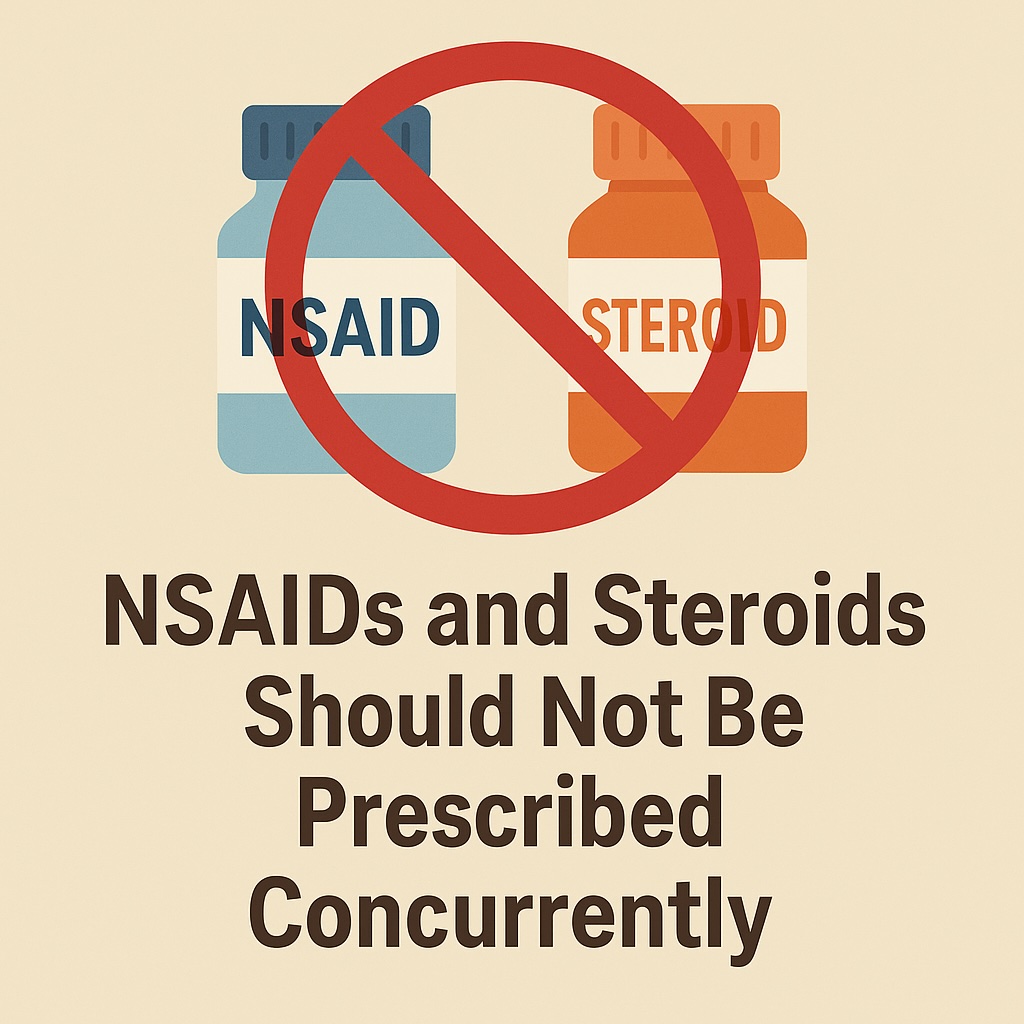

As a veterinarian, I see this mistake too often, and it worries me every time. With so many safe alternatives available to manage pain and inflammation in pets, the decision to combine steroids and non-steroidal anti-inflammatory drugs (NSAIDs) is one that can put dogs and cats at serious risk.
That’s why I’m writing this post: to educate pet parents so they can be strong advocates for their fur babies, and to remind veterinary colleagues about the dangers of this combination.
Two Common Dangerous Scenarios
- Veterinarian Prescribes Both
Sometimes a pet’s primary care doctor prescribes an NSAID and steroid together. This may be due to unfamiliarity with the risks, disbelief in the research, or simply being too rushed to notice the error. - Pet Parent Gives NSAIDs at Home
A dog or cat is prescribed a steroid for a medical condition, but after a long play session the family decides to give “just a little aspirin” for soreness without calling their vet. This self-medication can be life-threatening.
💡 Important: Always be honest with your veterinarian about any medications your pet is receiving. Withholding this information, even unintentionally, can endanger your pet’s life.
Commonly Prescribed NSAIDs & Steroids in Pets
NSAIDs for dogs and cats:
Carprofen (Rimadyl®) • Deracoxib (Deramaxx®) • Meloxicam (Metacam®) • Firocoxib (Previcox®) • Robenacoxib (Onsior®) • Grapiprant (Galliprant®)
Steroids for dogs and cats:
Prednisone • Prednisolone • Triamcinolone (Vetalog®) • Methylprednisolone (Depo-Medrol®) • Dexamethasone • Cortisone • Betamethasone • Hydrocortisone • Fluticasone • Budesonide
How Do Steroids & NSAIDs Work?
Both drug classes reduce inflammation but in slightly different ways:
- NSAIDs block prostaglandins, chemicals that trigger inflammation and pain. They are commonly used to treat arthritis, injuries, and chronic pain in pets.
- Steroids also suppress inflammation but through hormonal effects that additionally impact how the body conserves salt and water.
When combined, their effects stack, which may sound helpful but is actually dangerous. Protective prostaglandins in the gastrointestinal tract, kidneys, and liver are lost, leading to:
- GI ulcers and bleeding
- Acute kidney injury (AKI)
- Liver damage
- Even fatal gastrointestinal perforations
Side Effects of Steroids and NSAIDs
NSAIDs may cause:
- GI ulcers and bleeding
- Reduced kidney and liver blood flow
- Increased risk of bleeding disorders
Steroids may cause:
- Excessive thirst and urination
- Increased appetite and panting
- Pot-bellied appearance, hair coat changes
- Higher infection risk (skin, urinary, etc.)
- Diabetes mellitus (especially in cats)
Safe Alternatives for Pain Management in Pets
The good news? Your pet doesn’t need both steroids and NSAIDs together to be comfortable. Other options include:
- Non-NSAID pain relievers
- Acupuncture
- Rehabilitation therapy
- Laser therapy
- Referral to a board-certified specialist in surgery, sports medicine, or rehabilitation
The Take-Home Message
Mixing steroids with anti-inflammatory doses of NSAIDs is almost always contraindicated. This combination can cause devastating gastrointestinal bleeding, kidney injury, or liver dysfunction. Always talk with your veterinarian before starting, stopping, or adding any medication for your pet. Pain management can be tailored safely with multiple options available.