
Understanding the Role of Phosphorus
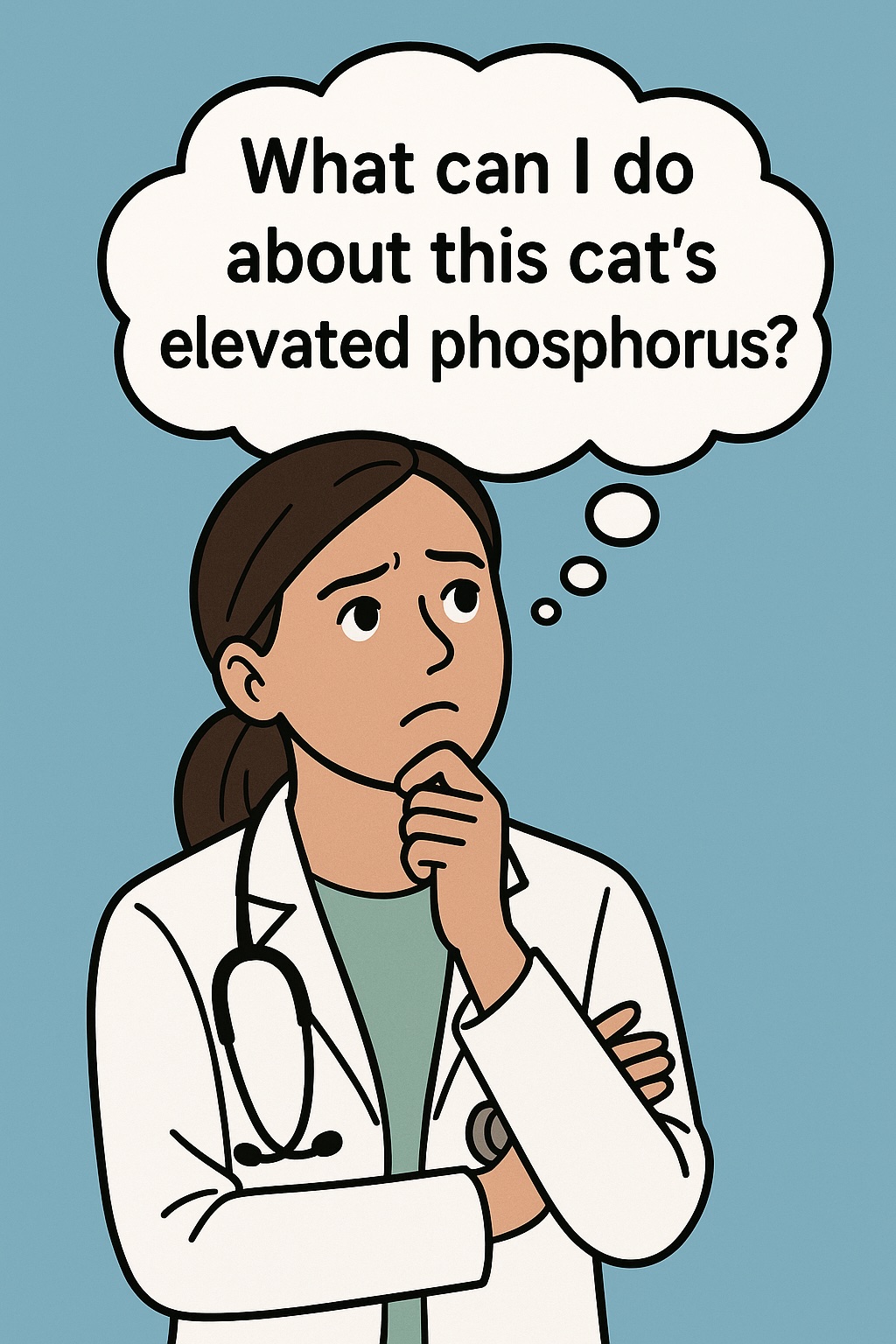
Think of phosphorus management in cats with chronic kidney disease (CKD) like crowd control at a busy concert. In a healthy cat, the kidneys act as the security team, quietly keeping things under control by filtering out extra phosphorus. But when CKD develops, the kidneys lose their ability to keep order. Too many phosphorus “guests” hang around in the bloodstream, and trouble begins.
Why Hyperphosphatemia Happens
Phosphorus normally comes from the diet, gets absorbed in the intestine, and is excreted by healthy kidneys. With CKD, damaged nephrons can’t eliminate enough phosphorus. The body responds by releasing fibroblast growth factor-23 (FGF-23) from bone cells to increase phosphorus excretion and reduce vitamin D activation.
Unfortunately, this leads to a cascade:
- Less vitamin D → reduced calcium absorption.
- Mild hypocalcemia triggers parathyroid hormone (PTH) release.
- PTH increases bone breakdown, releasing both calcium and phosphorus.
- The cycle repeats, worsening phosphorus overload
This “vicious loop” accelerates kidney damage, promotes soft tissue mineralization (like limescale in old pipes), and contributes to muscle wasting, bone disease, and reduced quality of life.
Why Monitoring Phosphorus Matters
Veterinarians don’t just look at “normal” lab values. They follow IRIS (International Renal Interest Society) guidelines, which set stage-specific phosphorus targets:
- Stage 2 CKD: 2.7–4.6 mg/dL
- Stage 3 CKD: 2.7–5.0 mg/dL
- Stage 4 CKD: 2.7–6.0 mg/dL
Even if your cat’s phosphorus falls within the “normal” range on a lab report, it may already be too high for their CKD stage. Elevated phosphorus is a driver of disease progression, not just a passive marker.
FGF-23 testing is another useful tool: it often rises before phosphorus does, giving vets an early warning sign that intervention is needed.
How We Treat Hyperphosphatemia in Cats with CKD
1. Dietary phosphorus restriction
Prescription kidney diets contain lower phosphorus levels (typically 0.3–0.6% dry matter). They’re the first-line treatment and can significantly slow CKD progression.
2. Phosphate binders
If diet alone isn’t enough, phosphate binders are added to meals. Options include:
- Aluminum hydroxide – effective and inexpensive, but requires monitoring for long-term side effects.
- Lanthanum carbonate – potent binder with low absorption, minimal systemic risk.
- Sevelamer – non-metal binder, also used in human medicine; may cause GI upset.
- Calcium-based binders – reserved for certain cases due to hypercalcemia risk
3. Regular monitoring
Recheck bloodwork every 4–8 weeks after changes, then every 3–6 months once stable. This helps fine-tune diet and binder dosing.
What Cat Owners Should Know
For pet parents, the key takeaways are:
- Hyperphosphatemia isn’t just a number — it actively worsens CKD.
- Kidney diets save lives by reducing phosphorus load.
- Phosphate binders can be added if diet alone isn’t enough.
- Regular monitoring is critical, even if your cat “seems fine.”
- Partner with your veterinarian — each cat’s treatment is individualized, and small adjustments can make a big difference in comfort and survival.
Final Thoughts
Hyperphosphatemia in cats with CKD is like a hidden accelerant. If left unchecked, it speeds disease progression and shortens life. By using IRIS guidelines, considering FGF-23 testing, and combining diet with phosphorus binders when needed, veterinarians and cat owners can work together to slow the disease and improve quality of life.
If your cat has CKD, ask your veterinarian about their phosphorus levels and whether they are within the IRIS target range. Managing this single mineral can make a profound difference in your cat’s journey with kidney disease.