
One of the more profound veterinary emergencies is a uterine infection in an intact female dog. This potentially lethal problem is called a pyometra. Affected patients should receive veterinary care as quickly as possible. This week I discuss this condition in hopes of raising awareness and promoting early identification and…
Diseases
-
-

Urethral Obstruction in Male Cats: A Life-Threatening Emergency
Urethral obstruction is one of the most common and dangerous emergencies affecting male cats. This condition occurs when a blockage prevents urine from leaving the bladder. As a result, pressure builds rapidly within the urinary tract and kidneys. Without prompt treatment, urethral obstruction can lead to severe electrolyte abnormalities, kidney…
-
Cytauxzoonosis – A Dangerous Tick-Borne Disease in Cats
When most pet parents think of think of tick-borne diseases affecting pets, they think about infections in dogs. Common examples of such ailments in dogs are Lyme disease (borreliosis), ehrlichiosis, Rocky Mountain Spotted Fever (rickettsiosis), babesiosis, bartonellosis, anaplasmosis, and hepatozoonosis. Yet we should not forget about cats! They, too, can be…
-
Rescue Inhaler Intoxication – Don’t Let Your Pet Inhale!
I’ve just returned from a week in Cartagena, Colombia where I had the privilege of presenting several lectures at the 41st World Small Animal Veterinary Association Congress. As I was hurriedly maneuvering through the airport, I saw a young woman use an inhaler after she had clearly run to her…
-
EPI – Exocrine Pancreatic Insufficiency: A Lack of Digestive Enzymes
Most pet parents are familiar with the terms pancreatitis and diabetes mellitus. These are two common pancreatic disorders in dogs and cats. Yet another pancreatitis disease – exocrine pancreatic insufficiency or EPI – is often overlooked as a cause of chronic weight loss and diarrhea. This week I highlight this…
-
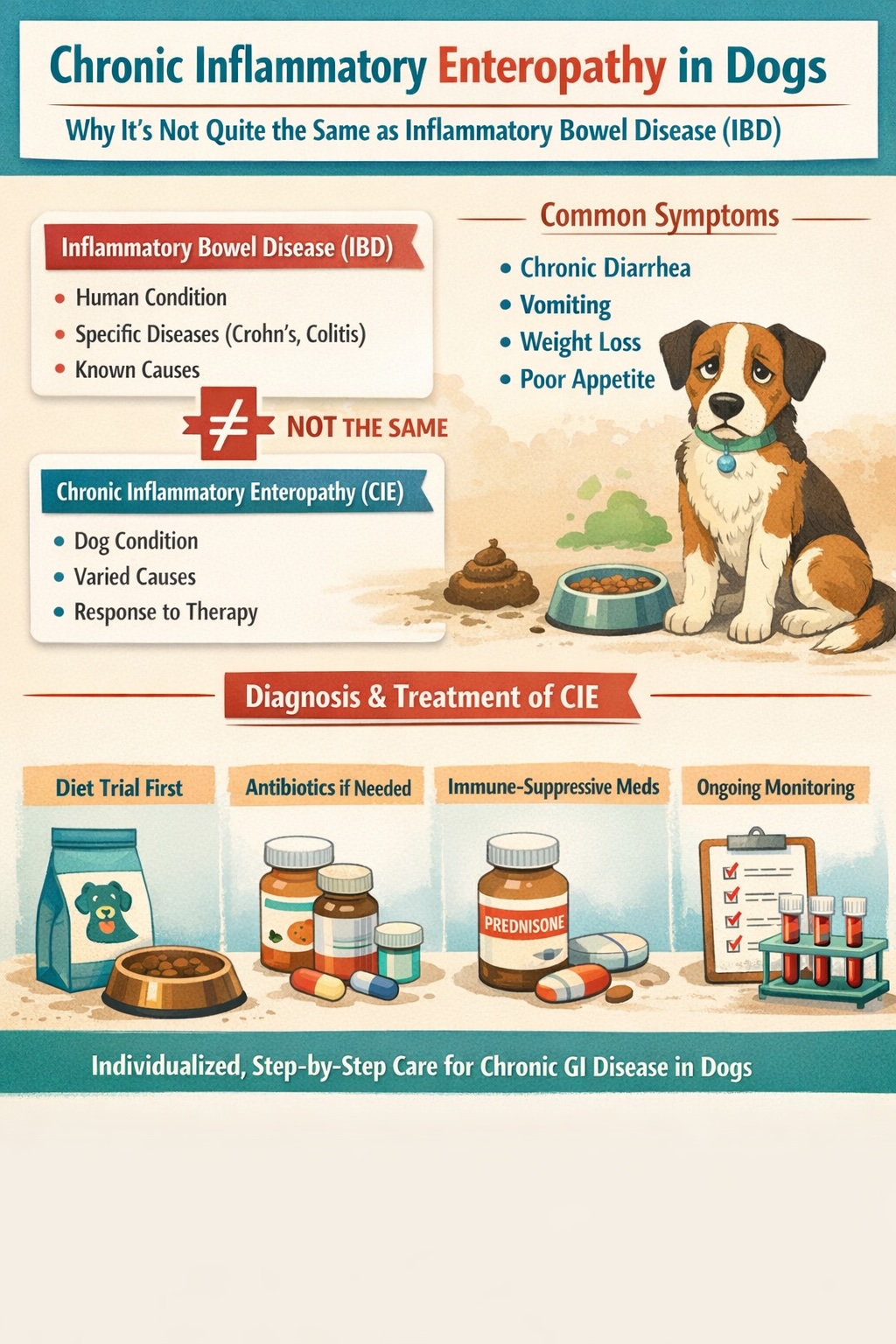
Chronic Inflammatory Enteropathy in Dogs
Often Called Inflammatory Bowel Disease, but Not Quite the Same Thing Chronic gastrointestinal disease is one of the most common and challenging problems encountered in canine medicine. Dogs with persistent diarrhea, vomiting, weight loss, or poor appetite often experience a diminished quality of life, and their caregivers understandably want clear…
-
Nosebleeds in Dogs & Cats – What Do They Mean?!
Nosebleeds (called epistaxis) are a relatively common reason for pet parents to present their dogs and cats to a veterinary emergency room. Sometimes the bleeding is quite minimal, manifesting only when patients sneeze. At other times, hemorrhage can be profound and scary. This week I share some information about epistaxis…
-
Parvovirus Infection in Dogs – Part II: Treatment & Prevention
This week we finish our discussion of parvovirus infection in dogs. I reviewed the origins and diagnosis of this viral disease last week. For this post, I will focus on treatment and prevention. Happy reading! Parvovirus – How is it treated in-hospital? I won’t beat around the bush when it…
-
Parvovirus Infection in Dogs – Part I: Cause & Diagnosis
Social media are truly curious phenomena. Opinions abound, including those unsupported by actual fact. We’ve all read them. Last week I read a dangerously inaccurate post regarding canine parvovirus that claimed humans made this potentially deadly disease. This post made my blood boil. Yet rather than perpetually fume, I’ve decided to…
-
Seizures in Dogs & Cats – What You Need to Know!
One of the scariest events in pet parents’ lives is seeing their fur baby have a seizure. They’re downright frightening even when you know what seizures look like. So this week I’ve devoted some blog space to bring you important information about seizures in dogs and cats. Happy reading! Seizures…