
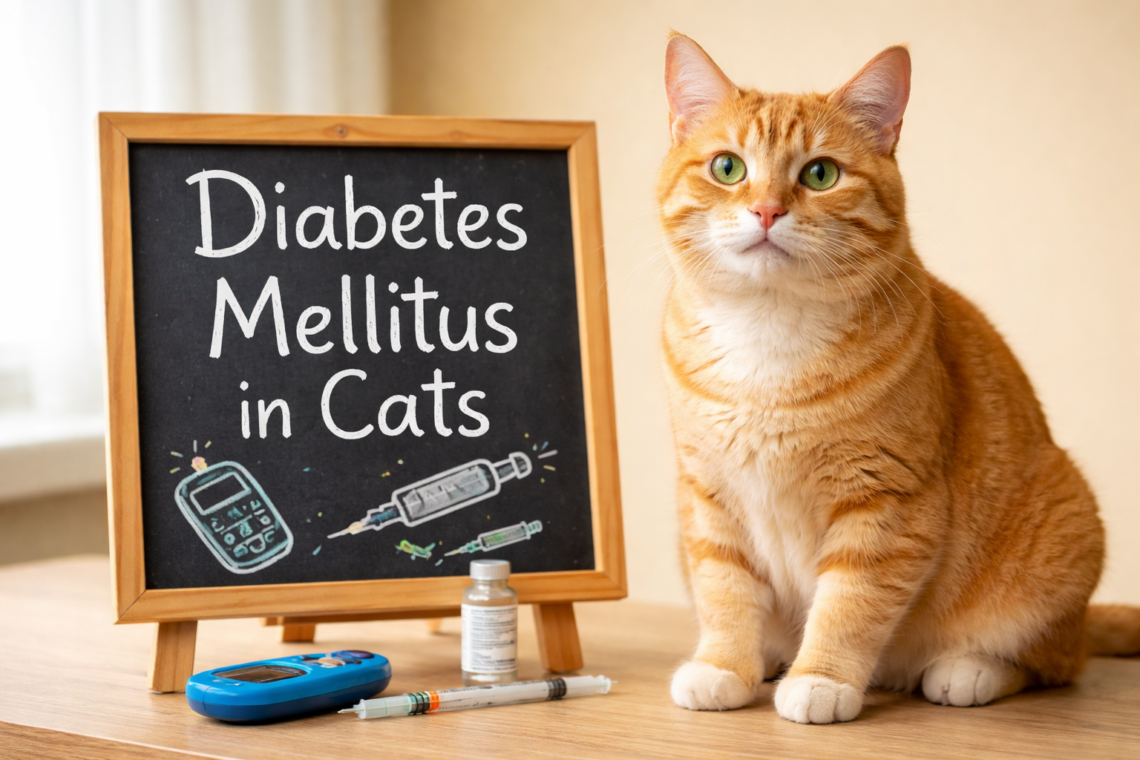

What Is Feline Diabetes Mellitus?
Feline diabetes mellitus is a common endocrine disorder characterized by insufficient insulin activity and persistent hyperglycemia. Regardless of cause, all affected cats experience pancreatic beta cell dysfunction or failure, preventing normal blood glucose regulation. Most cats develop a disease comparable to type 2 diabetes in humans where insulin resistance and impaired insulin secretion occur simultaneously.
Understanding the underlying cause of feline diabetes mellitus is essential, as targeted treatment strategies, such as weight loss or managing concurrent diseases, can significantly improve glycemic control and long-term outcomes.
Causes and Risk Factors of Feline Diabetes Mellitus
Feline diabetes mellitus develops through a combination of metabolic stressors, environmental influences, and genetic predisposition. Obesity is the most significant modifiable risk factor with excess body weight directly reducing insulin sensitivity. Chronic hyperglycemia contributes to glucotoxicity, further impairing pancreatic beta cell function and accelerating disease progression .
Concurrent diseases, including hypersomatotropism, hyperadrenocorticism, and pancreatitis, can worsen insulin resistance or impair insulin secretion. Certain medications, particularly glucocorticoids, may precipitate diabetes in susceptible cats. Additionally, reduced physical activity and indoor lifestyles increase risk while specific breeds demonstrate genetic predisposition.
Important emphasis:
- Obesity is the most important reversible driver of feline diabetes mellitus
- Early glycemic control can reduce glucotoxicity and preserve beta cell function
Clinical Signs of Feline Diabetes Mellitus
Cats with feline diabetes mellitus often present with progressive clinical signs that reflect chronic hyperglycemia. Increased thirst and urination are among the earliest and most noticeable changes. Despite an increased appetite, affected cats frequently lose weight. Additional findings include lethargy, poor coat quality, and dehydration. In some cases, diabetic neuropathy develops, resulting in hindlimb weakness and a characteristic plantigrade stance .
Common signs to watch for:
- Increased drinking and urination
- Increased appetite with weight loss
- Lethargy and unkempt coat
- Hindlimb weakness or difficulty jumping
Diagnosing Feline Diabetes Mellitus
Diagnosis of feline diabetes mellitus is based on the combination of persistent hyperglycemia, glucosuria, and compatible clinical signs. Interpretation of blood glucose levels must account for stress hyperglycemia, a common phenomenon in cats that can falsely elevate in-clinic readings. Therefore, diagnosis relies on repeated measurements and clinical context rather than a single value.
Serum fructosamine provides insight into average blood glucose over several weeks and is less affected by stress, though its role in predicting early disease remains limited .
Treatment Goals for Feline Diabetes Mellitus
The management of feline diabetes mellitus focuses on improving quality of life while achieving safe and effective glycemic control. The goal is not strict normalization of blood glucose at all costs but rather a balanced approach that minimizes clinical signs and complications.
Primary goals:
- Maintain excellent quality of life for both cat and caregiver
- Reduce clinical signs such as PU/PD and weight loss
- Prevent complications including hypoglycemia and diabetic ketoacidosis
- Achieve remission when possible without compromising safety
Insulin Therapy for Feline Diabetes Mellitus
Insulin therapy remains the cornerstone of treatment for feline diabetes mellitus. Long-acting insulins such as glargine and protamine zinc insulin (PZI) are commonly used due to their favorable pharmacokinetics and association with improved glycemic control. Most cats require twice-daily insulin administration with dose adjustments based on clinical response and monitoring data .
Proper insulin handling, storage, and administration are critical to treatment success. Consistency in dosing and routine significantly improves outcomes.
Key clinical points:
- Insulin is the most reliable treatment for feline diabetes mellitus
- Dose adjustments should be gradual and guided by trends
- Clinical signs are more important than isolated glucose readings
Non-Insulin Therapies
Non-insulin therapies may be appropriate for select cats that retain some endogenous insulin production. Sodium-glucose cotransporter 2 inhibitors have emerged as a newer option, reducing blood glucose through urinary glucose excretion. These medications require careful monitoring due to the risk of ketosis.
Other oral therapies, including glipizide and metformin, have limited efficacy and are generally reserved for cases where insulin therapy is not feasible .
Clinical emphasis:
- Non-insulin therapies are not first-line treatment for all cats
- Careful patient selection is essential for safety
- Insulin therapy remains superior for most cats
Diet and Nutrition in Feline Diabetes Mellitus
Nutritional management is a critical component of treating feline diabetes mellitus. Low-carbohydrate, high-protein diets reduce postprandial glucose spikes and decrease insulin requirements. Wet food is generally preferred due to lower carbohydrate content. In overweight cats, gradual weight loss significantly improves insulin sensitivity and increases the likelihood of remission .
Unlike dogs, cats do not require strict timing of insulin injections with meals, providing flexibility in feeding strategies. However, consistent caloric intake is essential to reduce the risk of hypoglycemia.
Nutritional priorities:
- Low carbohydrate intake (<12–15% metabolizable energy)
- High protein diets to maintain lean mass
- Controlled, gradual weight loss
- Consistent daily feeding patterns
Monitoring Feline Diabetes Mellitus
Monitoring feline diabetes mellitus requires an individualized, practical approach. Clinical signs, body weight, and overall well-being should guide treatment decisions more than any single laboratory value. Blood glucose curves performed at home provide valuable insight into insulin effectiveness while continuous glucose monitoring systems offer real-time data on glucose trends. Serum fructosamine reflects longer-term glycemic control .
Monitoring essentials:
- Focus on clinical trends rather than isolated values
- Perform home monitoring when possible
- Adjust therapy cautiously and systematically
- Reassess patients regularly, especially early in treatment
Diabetic Remission
One of the most important aspects of feline diabetes mellitus is the potential for remission. Approximately 30–40% of cats may achieve remission, particularly when treatment is initiated early and managed aggressively. Remission occurs when sufficient beta cell function returns to maintain normal glucose levels without ongoing therapy.
Early glycemic control reduces glucotoxicity and allows beta cell recovery while dietary carbohydrate restriction and weight loss improve insulin sensitivity. Addressing underlying conditions further increases the likelihood of remission.
Factors improving remission:
- Early diagnosis and rapid glycemic control
- Use of long-acting insulin protocols
- Low-carbohydrate diet
- Effective weight management
- Treatment of concurrent diseases
The Bottom Line
Feline diabetes mellitus is a common yet highly manageable disease. With early recognition, appropriate insulin therapy, targeted nutrition, and consistent monitoring, most cats can achieve excellent quality of life. Importantly, early and proactive management significantly increases the likelihood of remission, reinforcing the importance of collaboration between veterinary teams and cat owners.