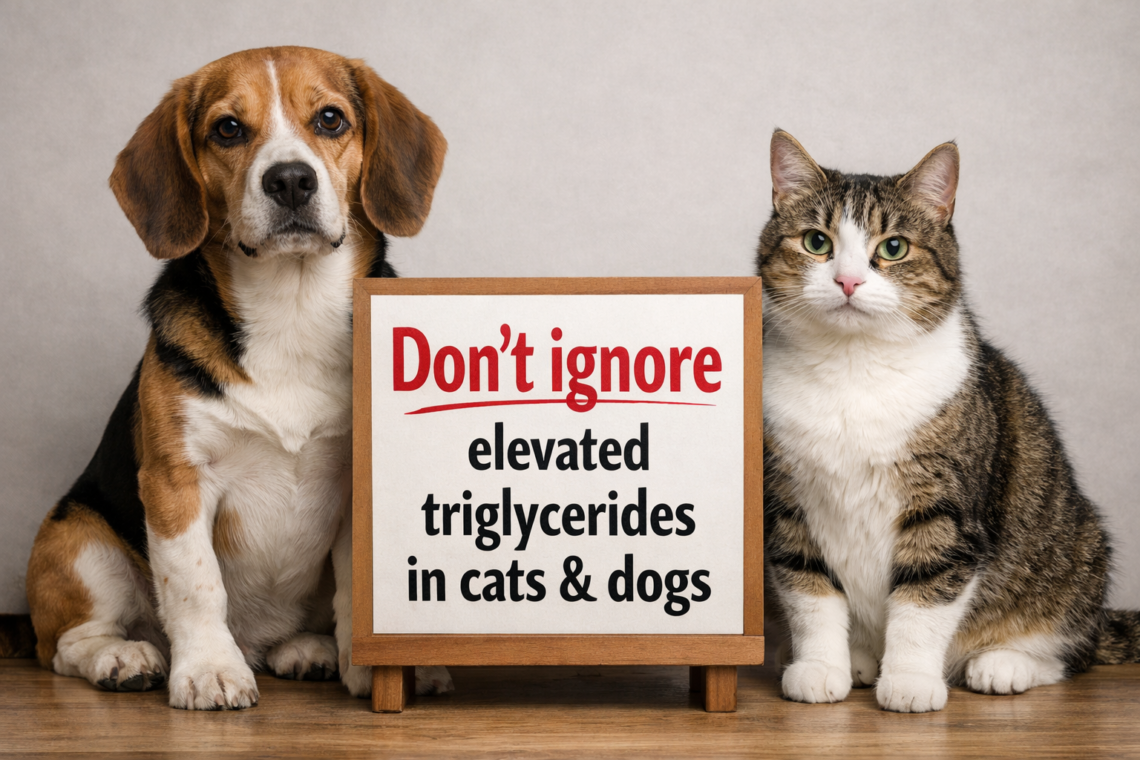

Hypertriglyceridemia in dogs and cats is often dismissed as an incidental laboratory finding, particularly when patients appear clinically well. However, elevated triglyceride concentrations can reflect significant underlying disease and, in some cases, directly contribute to life-threatening complications. For both pet owners and veterinary professionals, recognizing when hypertriglyceridemia is clinically relevant is essential to protecting patient health.
Triglycerides are a form of circulating lipid transported primarily within chylomicrons and very low-density lipoproteins (VLDLs). After a meal, transient increases in triglycerides are expected. Persistent or marked elevations, especially in fasted patients, should never be ignored.
What Is Hypertriglyceridemia?
Hypertriglyceridemia refers to an abnormal increase in circulating triglycerides in the bloodstream. Mild increases may be benign or transient, but moderate to severe elevations often indicate underlying metabolic dysfunction or disease.
Clinically, this abnormality may be detected incidentally on routine bloodwork or suspected when serum appears lipemic (milky or turbid). Importantly, visible lipemia typically reflects significantly elevated triglyceride levels and warrants further investigation.
Causes of Hypertriglyceridemia in Dogs and Cats
Hypertriglyceridemia can be broadly categorized as primary (genetic or breed-associated) or secondary (resulting from underlying disease or external factors). Distinguishing between these categories is critical for appropriate management.
Primary (Genetic or Idiopathic) Causes
Certain breeds are predisposed to primary hyperlipidemia, particularly dogs. These patients often have persistent elevations despite appropriate fasting and absence of identifiable secondary causes.
- Miniature Schnauzers (most commonly affected)
- Shetland Sheepdogs
- Beagles
- Other predisposed breeds
Primary hypertriglyceridemia is less commonly recognized in cats but may still occur.
Secondary Causes
Secondary hypertriglyceridemia is far more common and should always be considered first, especially in adult and senior patients.
- Endocrine disease:
- Diabetes mellitus
- Hyperadrenocorticism (Cushing’s disease)
- Hypothyroidism (dogs)
- Obesity
- Pancreatitis
- Hepatobiliary disease
- Nephrotic syndrome
- Medications:
- Glucocorticoids
- Phenobarbital
- Certain immunosuppressive drugs
- Postprandial (non-fasted sampling)
In cats, diabetes mellitus and obesity are among the most common contributors.
Why Hypertriglyceridemia Should Not Be Ignored
The clinical importance of hypertriglyceridemia lies in both its role as a marker of disease and its potential to directly cause harm. Even in asymptomatic patients, elevated triglycerides can precede serious complications.
Key Risks and Adverse Effects
- Pancreatitis One of the most clinically significant associations. Severe hypertriglyceridemia is a recognized risk factor for pancreatitis in dogs and may also contribute in cats. The proposed mechanism involves pancreatic capillary obstruction and free fatty acid toxicity.
- Hepatobiliary Disease Lipid accumulation can impair hepatic function and contribute to cholestasis or vacuolar hepatopathy.
- Insulin Resistance Elevated triglycerides can worsen glycemic control, particularly in diabetic patients, creating a detrimental cycle.
- Ocular Changes Lipemia retinalis, characterized by a milky appearance of retinal vessels, may occur in severe cases.
- Neurologic Signs Rarely, extreme hyperlipidemia can contribute to seizures or other neurologic abnormalities.
- Hyperviscosity Syndrome Markedly elevated lipid levels may increase blood viscosity, impairing microcirculation.
When Is Hypertriglyceridemia Clinically Significant?
Not all elevations require aggressive intervention, but several factors should raise concern:
- Persistent elevation in a properly fasted patient (≥12 hours in dogs, 10–12 hours in cats)
- Moderate to severe increases rather than mild elevations
- Presence of clinical signs (vomiting, lethargy, abdominal pain)
- Concurrent diseases such as diabetes or suspected pancreatitis
- Visible lipemia in serum or plasma
Diagnostic Approach
A systematic approach ensures that clinically important cases are not overlooked.
- Confirm appropriate fasting prior to sampling
- Repeat testing to confirm persistence
- Screen for underlying diseases:
- Blood glucose and urinalysis (diabetes mellitus)
- Endocrine testing as indicated
- Liver function tests
- Evaluate for pancreatitis using appropriate diagnostics (e.g., pancreatic lipase assays)
- Review medication history
Practical Takeaways for Veterinary Teams and Pet Owners
- Do not dismiss lipemia as “just a lab artifact”—it may signal significant disease.
- Always interpret triglyceride levels in the context of fasting status and clinical picture.
- Investigate secondary causes first, especially endocrine and metabolic disease.
- Recognize that hypertriglyceridemia can be both a marker and a mediator of disease.
- Early identification and management may prevent complications such as pancreatitis.
The Bottom Line
Hypertriglyceridemia in dogs and cats is more than a biochemical abnormality. It is a clinically meaningful finding that warrants thoughtful evaluation, particularly when persistent or severe. By recognizing its causes and potential consequences, veterinary professionals and pet owners can work together—within the triad of care—to ensure timely diagnosis and appropriate intervention.
Ignoring elevated triglycerides risks missing an opportunity to identify serious disease early or prevent avoidable complications.