A common reason for pet parents to bring their dogs and cats to the family veterinarian is an observable increase in thirst (called polydipsia or PD) and/or increased volume of urination (called polyuria or PU). A pet parent can’t keep a pet’s water bowl filled enough and/or the pet seems to “pee a…
Diseases
-
-
Cushing’s Disease in Dogs & Cats Explained
Picture an adrenal gland as a peanut M&M™. Cushing’s disease (or hyperadrenocorticism) is a problem with the chocolate coating, and it is much more common in dogs than in cats. As part of this condition the adrenal glands overproduce certain hormones, particularly the body’s own steroid called cortisol. An elevated…
-
The Dreaded Megaesophagus
This week was filled with patients with some challenging diseases, none more so than megaesophagus! What’s that you ask? Please take a few minutes to read more about this potentially debilitating disease of the esophagus (food tube) below. What is megaesophagus? Megaesophagus is a condition where there is decreased or…
-
Urethral Sphincter Mechanism Incompetence – My Dog Wet the Bed!
If your dog leaks urine when s/he lays down to rest or sleep, s/he may be living with a condition called urethral sphincter mechanism incompetence or USMI, a common disorder in adults dogs, particularly females. Indeed this condition may affect up to 20% of female dogs, and usually manifests within three…
-
Vomiting Cats
This is a statement I hear from pet parents almost on a daily basis. When I ask them where they heard such a concept, the response is usually, “that’s what my vet said.” Furthermore their family veterinarians have usually simply treated the vast majority of these cats symptomatically with diets…
-
Hypothyroidism in Dogs
In last week’s post, I discussed hyperthyroidism is cats. You may recall that hyperthyroidism occurs quite infrequently in dogs. Rather they more commonly develop a state of low thyroid production – hypothyroidism. Remember thyroid hormones are produced by the thyroid glands in the neck, and are important in controlling growth…
-
Hyperthyroidism in Cats
What is the thyroid gland? The thyroid gland is a two-lobed structure located in the neck, and produces several thyroid hormones. (Image courtesy of Animal Emergency & Referral Center of Minnesota; www.aercmn.com) The primary function of thyroid hormones is to control the rate at which cells function. Excess thyroid function…
-
Skin Lumps – Don’t Ignore Them!
A common reason for a pet parent to bring his/her pet to a family veterinarian is because s/he has discovered a new skin lump/mass on his/her dog or cat. This lump can be big or small. It may cause the pet discomfort or may truly be an incidental finding. Nevertheless…
-

Cranial Cruciate Ligament (CCL) Injury in Dogs: Causes, Diagnosis, and Treatment Options
Dogs, like people, can injure ligaments in their knee joints (stifles). In dogs, the ligament most often affected is the cranial cruciate ligament (CCL). In people, this same structure is called the anterior cruciate ligament (ACL). Because many pet parents recognize the term ACL, veterinarians often use both names to…
-
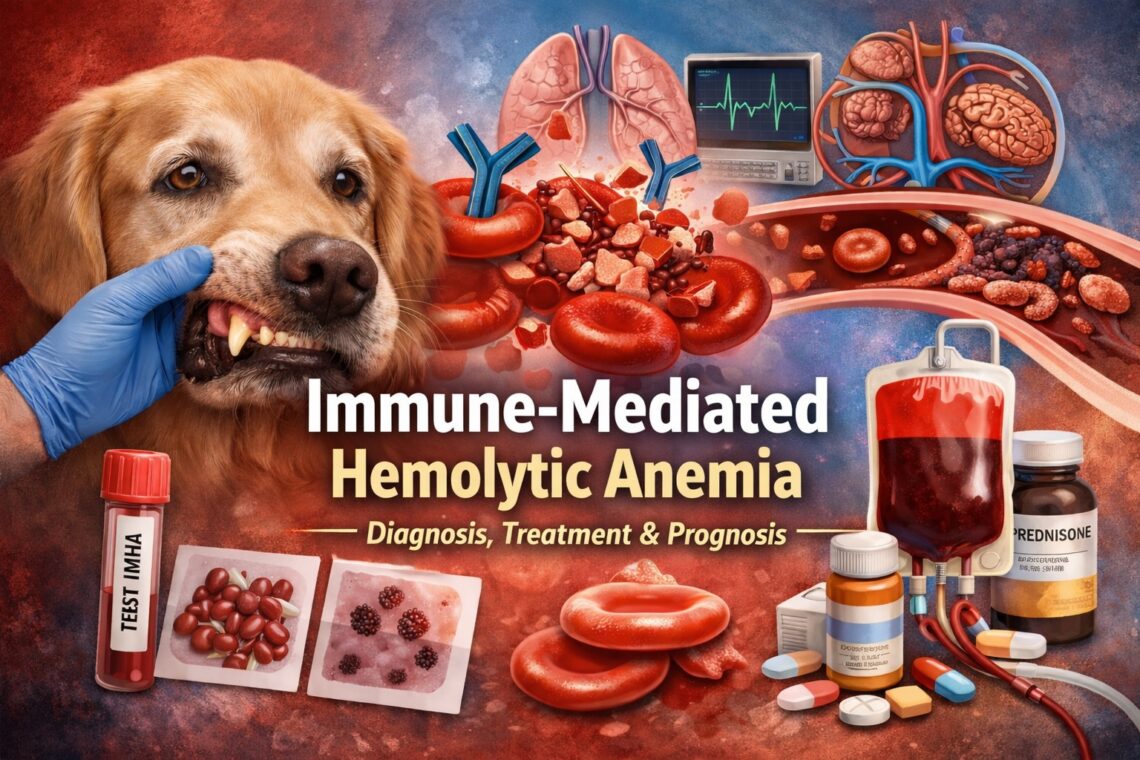
Immune-Mediated Hemolytic Anemia (IMHA): Diagnosis, Treatment, and Prognosis
Immune-mediated hemolytic anemia (IMHA) is one of the most common life-threatening causes of anemia in dogs and remains an important, though less frequent, disease in cats. In many patients, IMHA presents as a true medical emergency. Therefore, rapid recognition, accurate diagnosis, and timely intervention are essential for survival. What Is…