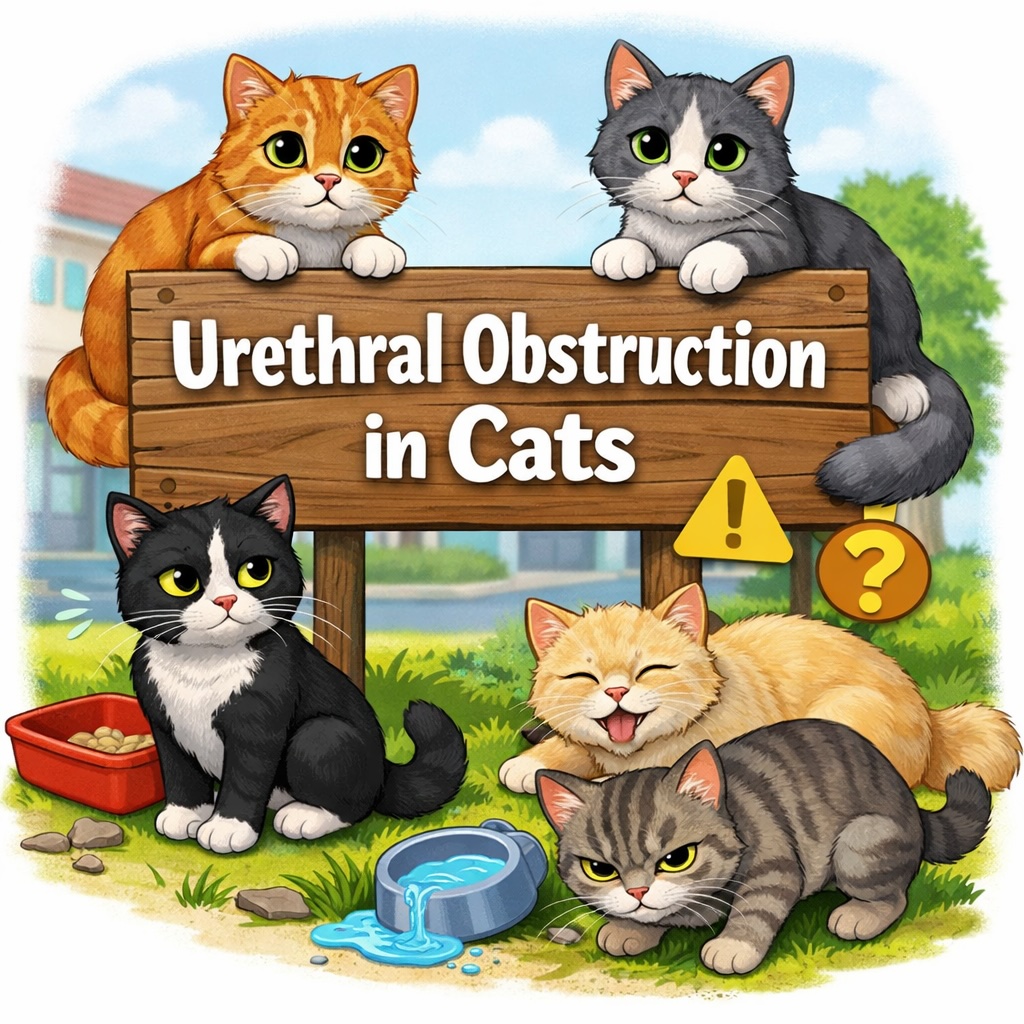

Urethral obstruction is one of the most common and dangerous emergencies affecting male cats. This condition occurs when a blockage prevents urine from leaving the bladder. As a result, pressure builds rapidly within the urinary tract and kidneys. Without prompt treatment, urethral obstruction can lead to severe electrolyte abnormalities, kidney failure, cardiac arrhythmias, bladder rupture, and death.
Because this disease progresses quickly, early recognition and immediate veterinary care are essential.
Why Male Cats Are at Greater Risk
Male cats have a long, narrow urethra, particularly within the penile region. Consequently, even small amounts of inflammation, debris, or crystals can completely block urine flow. In contrast, female cats have a shorter and wider urethra, which makes obstruction uncommon.
Therefore, veterinarians consider urethral obstruction primarily a male-cat disease.
What Causes Urethral Obstruction?
In many cases, veterinarians cannot identify a single trigger. Approximately half of all cases are classified as idiopathic, meaning no specific cause is found. However, several known contributors exist, including:
- Urethral plugs, composed of crystals, inflammatory cells, and mucus
- Urinary stones (uroliths)
- Urethral swelling or muscle spasm
- Scar tissue or tumors, which occur less commonly
Additionally, certain risk factors increase the likelihood of obstruction. These include stress, obesity, indoor-only lifestyle, dry-food-only diets, multi-cat households, and anxious or fearful temperament.
Clinical Signs Pet Owners May Notice
Signs of urethral obstruction vary in severity and often worsen rapidly. Importantly, some cats show only subtle changes at first. Common warning signs include:
- Straining or repeated attempts to urinate
- Vocalizing while in the litter box
- Urinating outside the litter box
- Blood-tinged urine
- Restlessness or hiding behavior
- Vomiting, lethargy, or decreased appetite
If a cat produces little to no urine over several hours, this represents a medical emergency and requires immediate veterinary attention.
What Veterinarians Find on Examination
During the physical examination, veterinarians typically detect a firm, enlarged urinary bladder that cannot be manually expressed. Cats may also appear painful, weak, dehydrated, or lethargic.
To guide treatment, veterinarians perform diagnostic testing to evaluate kidney function, electrolyte disturbances, and cardiac risk. A standard evaluation often includes bloodwork, urinalysis, imaging, electrolyte measurement, and heart rhythm monitoring.
How Veterinarians Treat Urethral Obstruction
Treatment focuses on stabilizing the patient while addressing the underlying obstruction. Specifically, veterinarians aim to:
- Relieve the blockage
- Control pain
- Correct dehydration and electrolyte abnormalities
- Prevent cardiac and kidney complications
Relieving the Obstruction
Veterinarians usually place a urinary catheter under anesthesia or heavy sedation. In severely affected cats, temporary bladder decompression may occur first to reduce pressure and improve stability.
Pain Management
Urethral obstruction causes significant pain. Therefore, veterinarians provide multimodal analgesia, often combining opioids and medications such as gabapentin. Because these cats commonly have kidney compromise, veterinarians generally avoid non-steroidal anti-inflammatory drugs.
Fluid and Electrolyte Support
Veterinarians tailor intravenous fluid therapy to correct dehydration and support kidney recovery while avoiding fluid overload. Balanced electrolyte solutions often outperform traditional saline because they resolve acid–base disturbances more efficiently.
When potassium levels rise dangerously, veterinarians initiate targeted therapy promptly to protect the heart and restore normal rhythm.
Are Antibiotics Necessary?
Most cats with urethral obstruction do not have bacterial urinary tract infections. As a result, veterinarians avoid antibiotics unless urine culture confirms infection. Importantly, routine antibiotic use does not prevent recurrence and may promote antimicrobial resistance.
Understanding the Risk of Re-Obstruction
Unfortunately, re-obstruction remains common, especially within the first two weeks after treatment. Veterinarians monitor hospitalized cats closely and remove urinary catheters only after kidney values normalize, urine output stabilizes, and urine quality improves.
Although medications that relax the urethra are sometimes prescribed, recent studies show inconsistent benefits. Cats with traumatic catheterization or severe urethral inflammation face a higher risk of recurrence.
Post-Discharge Care at Home
Long-term success depends heavily on home management. To reduce recurrence risk, veterinarians often recommend:
- Feeding canned or prescription urinary diets
- Increasing water intake throughout the home
- Maintaining clean, accessible litter boxes
- Reducing household stress
- Providing environmental enrichment and pheromone therapy
Follow-up evaluation typically occurs 7 to 10 days after discharge to reassess urine concentration, pH, and crystal formation.
What If Financial Constraints Limit Care?
Standard treatment can be costly, and financial limitations sometimes influence medical decisions. Fortunately, alternative protocols exist for families unable to pursue full hospitalization. These approaches may include temporary catheterization, pain control, subcutaneous fluids, and close monitoring at home.
However, recurrence rates remain higher with these strategies. Veterinarians should clearly explain both benefits and risks so families can make informed decisions.
When Surgery Becomes the Best Option
When cats experience recurrent obstructions despite appropriate medical care, veterinarians may recommend perineal urethrostomy surgery. This procedure widens the urethral opening and significantly reduces future obstruction risk.
Many specialists now advocate for earlier surgical intervention after the first failure of conventional treatment rather than waiting for multiple recurrences.
Key Takeaway for Pet Owners and Veterinarians
Urethral obstruction represents a painful, rapidly progressive, and potentially fatal condition. However, prompt recognition, aggressive stabilization, and thoughtful long-term management allow many cats to recover and thrive.
If a cat strains to urinate or stops producing urine altogether, immediate veterinary care can save its life.