
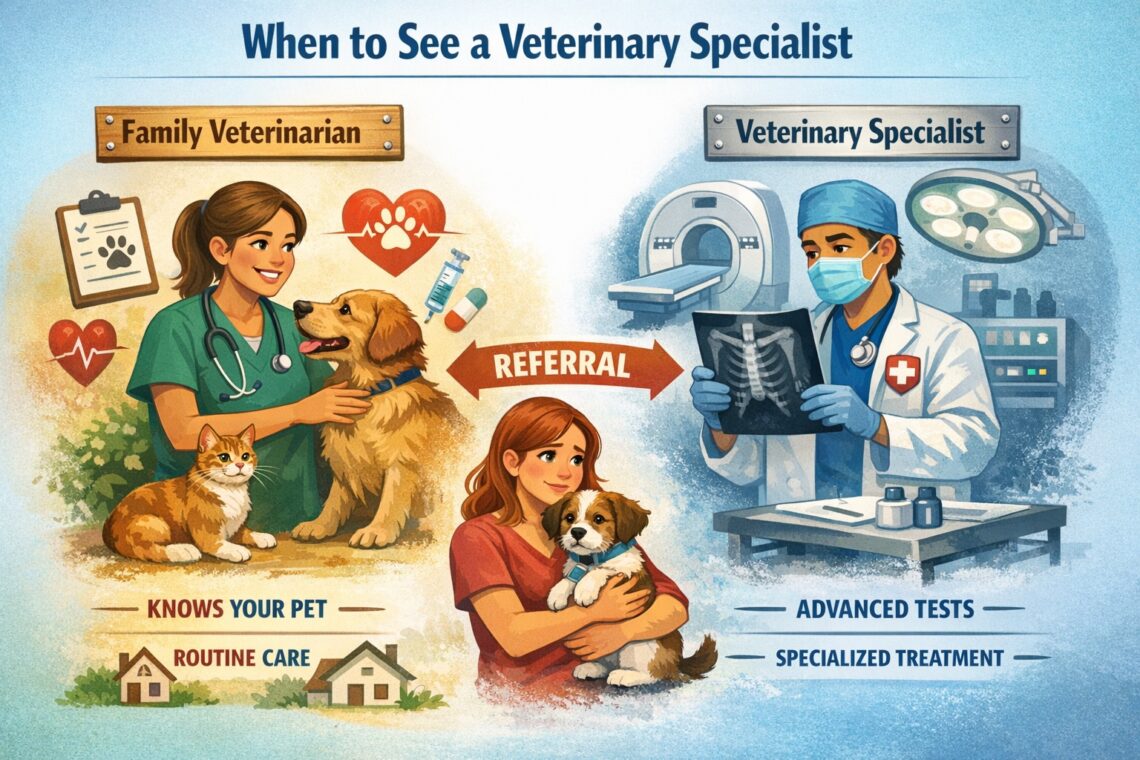

Let’s start with a familiar comparison from human medicine. If you are worried about your heart, you first schedule an appointment with your primary care physician. That visit is essential. Your family doctor knows your medical history, understands your long-term health, and provides continuity of care. Simply put, the relationship with your primary care doctor matters.
However, if a serious heart condition is identified, your physician refers you to a cardiologist, a board-certified heart specialist. Similarly, if surgery is required, your primary care doctor refers you to a surgeon. They do not perform the operation themselves.
Veterinary medicine works a bit differently. Family veterinarians are legally licensed to perform a wide range of procedures with your authorization. Therefore, the key question is not “Can my veterinarian perform this procedure?” but rather “Is my veterinarian the best person to perform this procedure for my pet’s specific condition?”
The Importance of the Family Veterinarian–Pet Relationship
Your relationship with your family veterinarian closely mirrors your relationship with your own primary care physician. In many cases, your veterinarian has known your pet since puppyhood or kittenhood. They understand your pet’s medical history, lifestyle, and day-to-day health needs. Because of this, family veterinarians are uniquely positioned to manage routine care and recognize when something is not quite right.
How Veterinary Specialists Add Value to Your Pet’s Care
In contrast, board-certified veterinary specialists complete advanced training focused on complex medical and surgical conditions. As a result, they bring deep expertise, advanced diagnostic tools, and specialized treatment options to challenging cases. Working collaboratively with your family veterinarian, specialists help refine diagnoses, recommend advanced therapies, and guide treatment decisions.
Without question, a board-certified veterinary specialist can be an invaluable member of your pet’s healthcare team.
Asking for a Referral Is Always Appropriate
Pet parents should never hesitate to ask their family veterinarian about a referral to a veterinary specialist. Some worry about hurting their veterinarian’s feelings. Fortunately, this concern is unnecessary. Veterinary specialists work with primary care veterinarians, not instead of them. In fact, many family veterinarians welcome the additional insight and support specialists provide.
When Should You Consider Seeing a Veterinary Specialist?
Pet parents often seek specialty consultation for several common reasons, including:
- A pet’s condition is not responding to initial treatment
- A pet’s condition is worsening or progressing
- A family veterinarian would like a second opinion
- A pet requires 24/7, around-the-clock care
- A pet would benefit from advanced diagnostics or specialized therapies
How Specialists Support Diagnosis and Treatment Planning
When a diagnosis is already established, veterinary specialists can confirm both the diagnosis and treatment plan, providing reassurance for pet parents and veterinarians alike. Alternatively, when a diagnosis remains unclear or treatment is ineffective, specialists can help refine the diagnosis and adjust therapy. The ultimate goal is always the same: restoring and preserving the highest possible quality of life for your pet.