
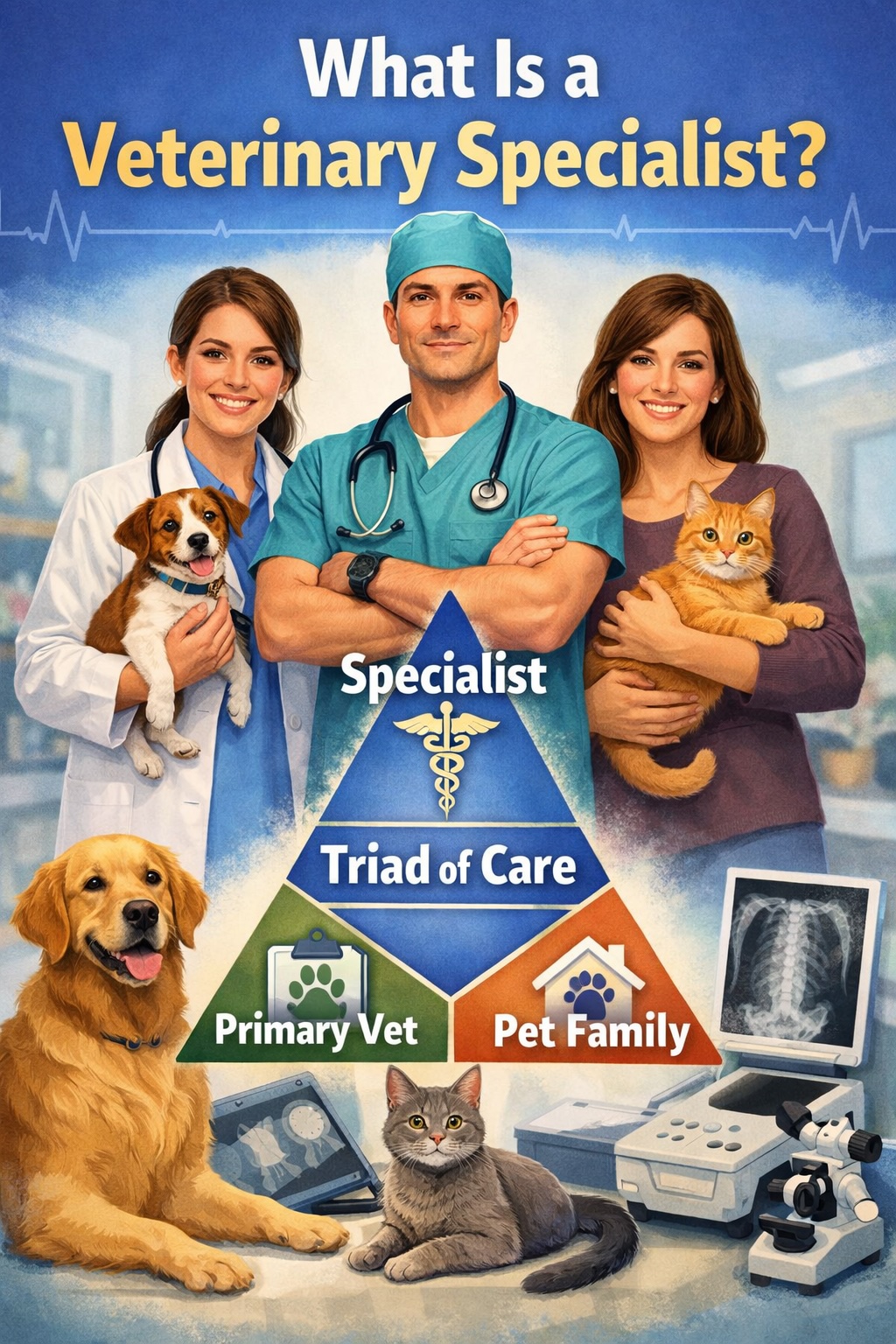

“I had no idea there were specialists for pets!”
I hear this statement from pet parents every single day. Because of that, I started this blog to increase awareness and visibility of the extraordinary work board-certified veterinary specialists perform daily. At the same time, this content is not intended to diminish the exceptional care provided by primary care veterinarians. In fact, many veterinary specialists—including myself—entrust their own pets to primary care doctors. Instead, I firmly believe in the triad of care: the pet family, the primary care veterinarian, and the veterinary specialist. When these partners collaborate effectively, pets achieve the best possible outcomes.
So, what better way to begin this blog than by explaining exactly what a veterinary specialist is? First, however, it helps to understand the demanding pathway required to become a veterinarian in the United States.
The Path to Becoming a Veterinarian in the United States
To practice veterinary medicine in the U.S., an individual must first earn an undergraduate degree, most often a Bachelor of Science or Bachelor of Arts. This step typically requires four years of study. Next, the candidate must gain acceptance into an accredited veterinary college, an intensely competitive process, and complete an additional four years of professional education.
After graduation, every veterinarian must pass rigorous national and state board examinations before entering clinical practice. All veterinarians complete this same foundational pathway. Along the way, they invest years of study, extraordinary effort, and often significant educational debt to enter a profession they find deeply meaningful and rewarding.
Why Some Veterinarians Choose to Specialize
For many veterinarians, general practice provides a fulfilling and lifelong career. However, others feel driven to pursue advanced expertise in a focused area such as oncology, cardiology, or critical care.
Personally, I felt drawn early to the fast pace of emergency medicine and the precision required in the intensive care unit. While I knew I wanted to become a veterinarian at age five, I knew by sixteen that I wanted to specialize in emergency and critical care. Later, during veterinary school, a mentor encouraged me to pursue internal medicine as well. After completing an internship and two residencies, I can confidently say these specialties complement one another and continue to challenge and humble me every day.
Additional Training Required for Veterinary Specialists
Veterinary specialists complete extensive post-graduate clinical training beyond veterinary school. This training typically includes:
- A one-year rotating internship
- A residency lasting three to five years depending on the specialty
Unlike human medicine, internships and residencies are not required for all veterinarians. In contrast, the American Medical Association requires all physicians to complete residency training, which commonly lasts three to seven years.
Board Certification: The Final Step
The culmination of residency training is successful completion of a rigorous board-certification examination. Some specialties require more than one exam. To qualify, candidates must meet strict standards, including advanced procedural skills, teaching experience, and publication of peer-reviewed research.
I have completed three board examinations, two in internal medicine and one in emergency and critical care. These examinations are intentionally demanding. However, they play a critical role in ensuring that board-certified veterinary specialists meet the highest standards of clinical expertise and professional accountability.
Recognized Veterinary Specialties
The American Veterinary Medical Association formally recognizes veterinary specialties through Registered Veterinary Specialty Organizations (RVSOs). Rather than listing them here, pet owners and veterinary professionals can view the most current and complete list of recognized veterinary specialties directly from the AVMA:
👉 https://www.avma.org/education/veterinary-specialties
This resource provides clear, up-to-date information on each specialty, training requirements, and certification standards.




Great blog! Best of luck!
Thanks so much for the support Dr. Walters. As you well know, animal owners simply don’t know veterinary specialists exist, so I’m hopeful my blog will help shed some much-needed light. I hope you will continue to share my posts with your clients!
Amen! This site is long overdue! Thank you for educating pet owners that there are specialists in veterinary medicine!
Thanks Dr. Tiches – I really appreciate the support! I truly hope you will continue to help me inform pet owners about the availability of veterinary specialists like you by sharing my blog with your clients.
Before our dog Schatzi became ill, we had no idea that there were specialists available! We were told by her veterinarian that we would have her 1 to 2 month at the most. A retired veterinarian told us not to waste our money with treatments and to save it towards a new puppy! You can imagine how worried we were before meeting with Dr. Byers.
7 months have past and we have our old Schatzi back, as good as new! We are vigilant in her care and let her dictate our lives ( well, she always did anyway). As long as she has no pain and has a good quality in life, we will do whatever she needs; in turn we just get to love her a little while longer thanks to the treatment and guidance of Dr. Byers and all the caring staff at Midwest Veterinary Specialty Hospital!
Thanks for the awesome comment Mrs. Schmidt! I really appreciate your support of this blog. As you know, too few parents know that pets can have specialists too! Please continue to help spreading the word by sharing this blog with all the pet parents you know!