
Introduction
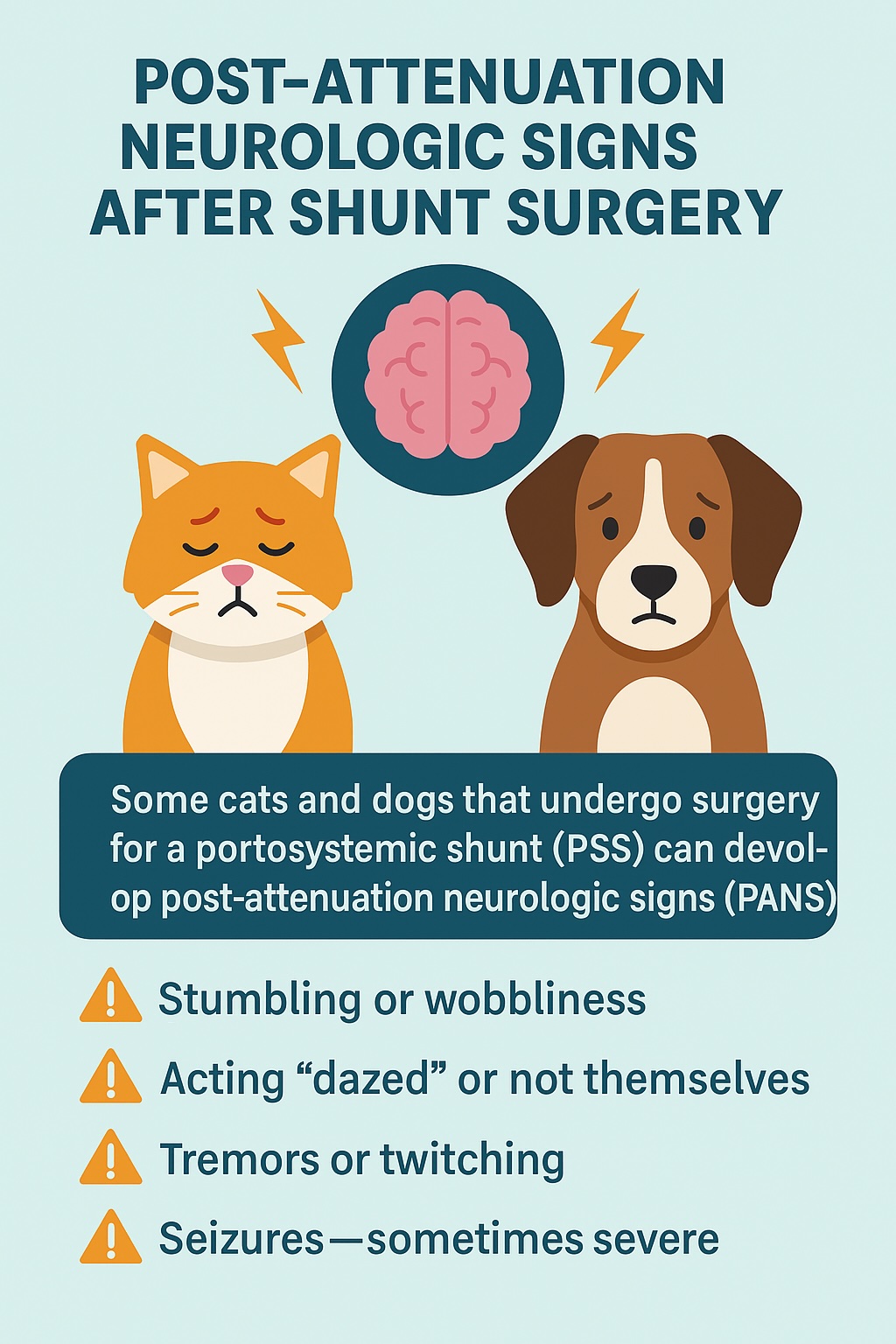
Portosystemic shunts (PSS) are abnormal blood vessels that let blood bypass the liver. Surgery to correct these shunts can save lives, but sometimes pets, especially cats and small-breed dogs, develop post-attenuation neurologic signs (PANS). These are brain-related problems that happen days after surgery, ranging from mild confusion to severe seizures.
For pet owners, this can be frightening. For veterinarians, it is a complex complication with unclear causes and variable outcomes. Let’s break down what we know about pathophysiology, signs, diagnosis, and treatments.
Pathophysiology: Why Does This Happen?
Scientists still don’t fully understand why some pets develop PANS. Importantly, these problems often occur even when blood sugar, electrolytes, and ammonia levels are normal.
Proposed mechanisms include:
- CNS metabolic changes: After shunt closure, sudden shifts in brain chemistry may unmask hidden imbalances. A decline in natural benzodiazepine-like substances or neurotransmitter changes could trigger seizures.
- Hepatic encephalopathy connection: Pre-surgical hepatic encephalopathy (HE) increases risk. Dogs and cats with HE may experience a greater shock to the nervous system once blood flow normalizes.
- Micronutrient and toxin buildup: Manganese accumulation in the brain has been documented in dogs with shunts and may contribute to abnormal brain activity.
- Cats vs. dogs: Cats appear to be at much higher risk than dogs, with studies showing PANS in up to 39% of cats and seizures in 20%. In dogs, PANS incidence varies between 1.6–27% with seizures (PAS) in 0–18%.
Clinical Signs
PANS usually appear within 1–7 days after surgery.
For Pet Owners (in simple terms):
- Wobbliness or stumbling
- Trouble seeing (temporary blindness)
- Acting dazed or “not themselves”
- Tremors or twitching
- Seizures (sometimes very severe)
For Veterinary Professionals:
- Signs range from subtle mentation changes, circling, ataxia, head pressing, or tremors to generalized tonic–clonic seizures and status epilepticus.
- Cats may progress rapidly from ataxia to blindness or seizures, often more severely than dogs.
- Many cases are unrelated to perioperative hypoglycemia, electrolyte imbalances, or hyperammonemia.
Diagnosis
There is no single test for PANS. Diagnosis is largely clinical and exclusionary.
Steps include:
- Rule out metabolic causes – check glucose, electrolytes, ammonia, calcium.
- Monitor timing – onset within 96 hours (cats) or ~48 hours (dogs) strongly suggests PANS.
- Neurologic exam – evaluate mentation, vision, motor coordination, and seizure activity.
- Imaging & histopathology (research/advanced cases) – MRI or necropsy findings sometimes show brain manganese deposition, ischemia, or non-specific lesions.
Treatment
Because the exact cause is unclear, treatment focuses on supportive care and seizure control.
Conventional Medicine
- Antiepileptic drugs (AEDs): Phenobarbital, levetiracetam, potassium bromide, and benzodiazepines are commonly used, but no drug consistently prevents or cures PANS.
- Intensive care: Oxygen support, fluids, and strict monitoring are often required.
- Prognosis: Survival varies. Mortality in dogs with PAS can reach 37% within 30 days. Cats may have even higher mortality, particularly when seizures are uncontrolled.
Alternative & Complementary Approaches
- Case reports describe the use of acupuncture (GV20, GB20, LI4) and herbal medicine (Huang Lian Jie Du Tang), which showed promise in reducing ataxia and seizures post-PSS surgery. While promising, these remain adjunctive, not primary, therapies.
Prognosis
- Dogs: If they survive the first 30 days, most regain good quality of life. A study found 90% survived more than 6 months, and owners rated quality of life as high.
- Cats: Outcomes are more guarded. Meta-analysis shows 17% overall mortality for PANS and up to 37% for seizures (PAS). Still, some cats recover fully with aggressive supportive care.
Take-Home Messages for Pet Owners
- Shunt surgery saves lives, but neurologic complications can occur.
- Watch closely for changes in behavior, coordination, or seizures in the first week after surgery.
- Immediate veterinary care is critical & early treatment improves survival.
- Even if complications occur, many pets recover and go on to live happy lives.
Veterinary Professional Insights
- PANS is a distinct syndrome, not simply HE recurrence.
- Risk factors include preoperative HE, older age, and possibly breed predispositions.
- Preventive AED use has not reliably reduced PANS incidence.
- Multimodal supportive care, rapid seizure control, and client communication are key to optimizing outcomes.