Medical doctors have used stem cell therapy to help treat a myriad of orthopedic conditions in people. Veterinarians have similarly used stem cell therapy, but we’re still learning about the benefits and risks of this treatment modality in pets. In this week’s post I share some information about stem cell…
-
-
Intussusception – When the Gut Becomes a Telescope
Most dog owners have heard of many of the common gastrointestinal problems that afflict dogs. Parvovirus in dogs. Intestinal parasites (aka “worms), foreign objects causing an obstruction, inflammatory bowel disease (IBD), and even gastric dilatation-volvulus (aka: “bloat”). Yet, there is one about which few parents know. Which one you ask?…
-
Grass & Your Pets – Why Dogs & Cats Mow the Lawn with Their Mouths!
This week I thought I would do something a little bit different. Instead of blogging about a specific disease process, I thought I would dedicate time to answering a very common question I’m asked as a board-certified veterinary internal medicine specialist: Why does my pet eat grass? To date, veterinarians…
-
Protein-Losing Enteropathy (PLE) – When Protein Passes in the Poop
As a clinician, educator, and administrator, I deal with a lot of poop – figuratively and literally. One of the most common problems I encounter is a pet with chronic gastrointestinal signs (e.g. vomiting, weight loss, diarrhea) and a concurrently low blood protein level. This is called a protein-losing enteropathy…
-
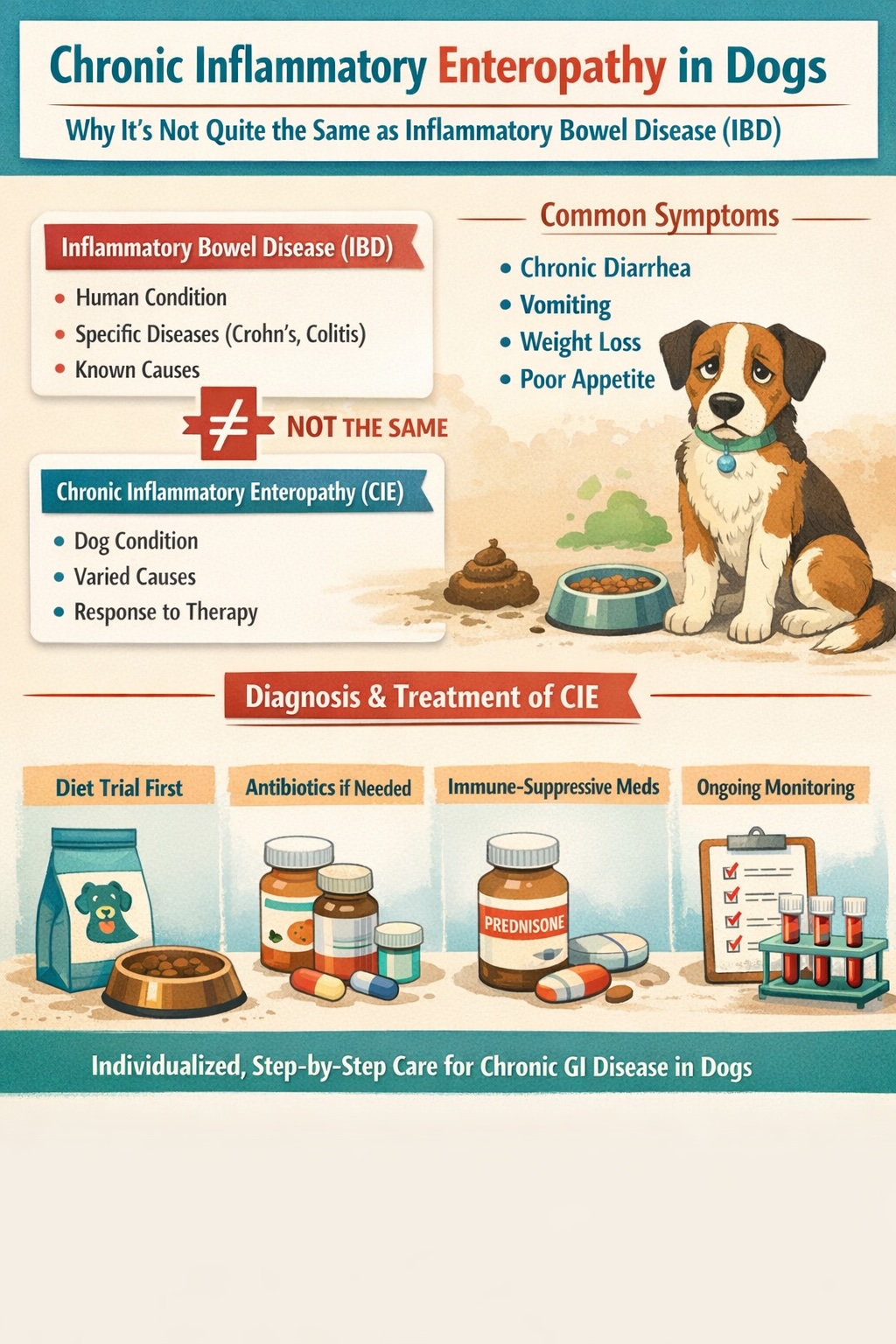
Chronic Inflammatory Enteropathy in Dogs
Often Called Inflammatory Bowel Disease, but Not Quite the Same Thing Chronic gastrointestinal disease is one of the most common and challenging problems encountered in canine medicine. Dogs with persistent diarrhea, vomiting, weight loss, or poor appetite often experience a diminished quality of life, and their caregivers understandably want clear…
-
Acute Pancreatitis in Dogs: What It Is, Why It Happens, and How It Is Treated
What Is Acute Pancreatitis? The pancreas is a boomerang-shaped organ within the abdominal cavity. It performs several essential functions. Most importantly, it produces digestive enzymes that allow dogs to break down fats, proteins, and carbohydrates. Acute pancreatitis develops when the pancreas becomes suddenly inflamed. Normally, digestive enzymes activate in the…