
Often Called Inflammatory Bowel Disease, but Not Quite the Same Thing
Chronic gastrointestinal disease is one of the most common and challenging problems encountered in canine medicine. Dogs with persistent diarrhea, vomiting, weight loss, or poor appetite often experience a diminished quality of life, and their caregivers understandably want clear answers and effective solutions. In many of these cases, people hear the term inflammatory bowel disease, or IBD.
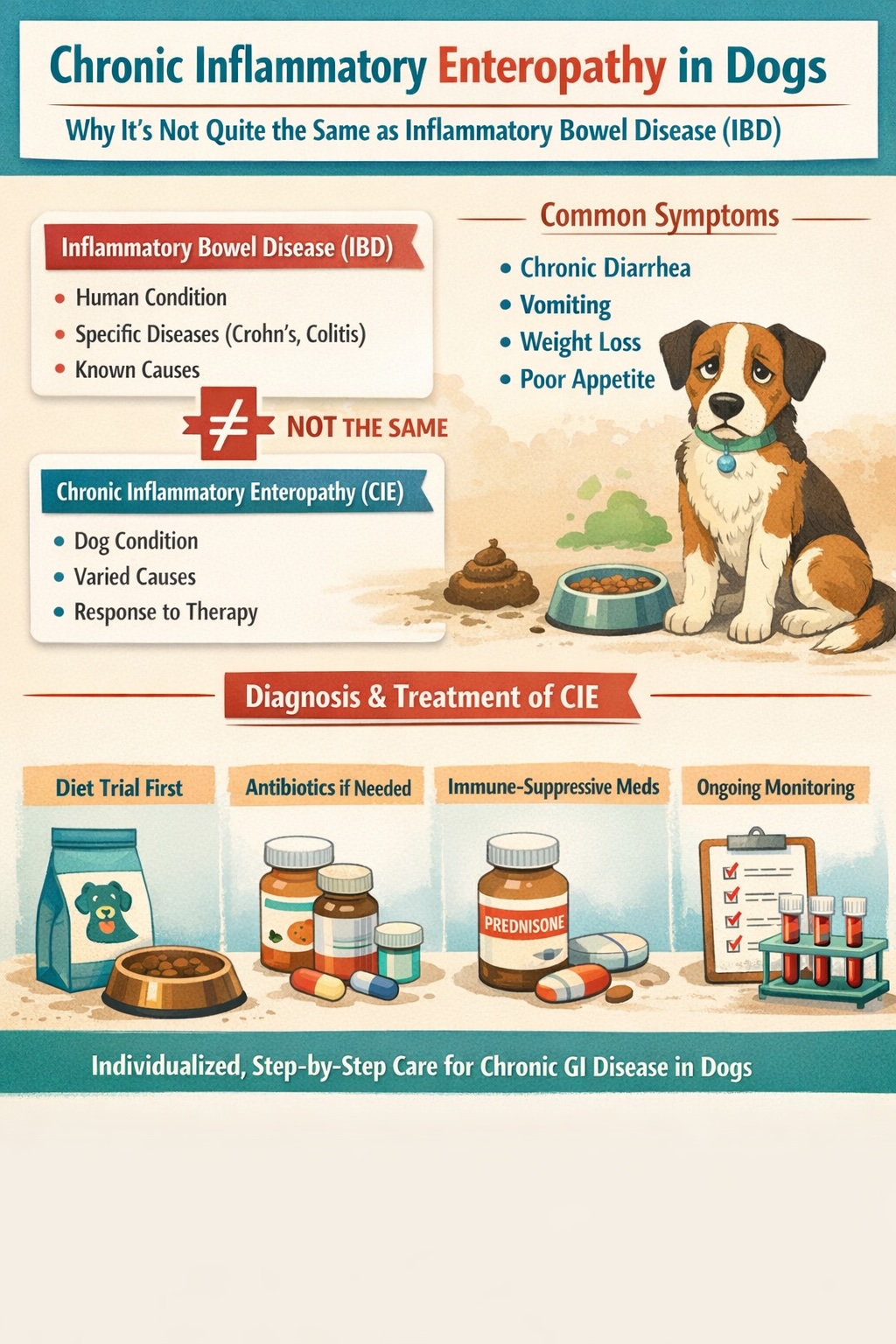
While IBD is commonly used in everyday conversation, it is not the preferred or most accurate term in dogs. Instead, veterinarians increasingly use chronic inflammatory enteropathy, abbreviated as CIE. This distinction is more than semantics. It directly affects how disease is diagnosed, treated, and explained to pet owners.
Why Inflammatory Bowel Disease Is Not the Best Term in Dogs
The term inflammatory bowel disease originates from human medicine. In people, IBD refers to specific, well defined conditions such as Crohn’s disease and ulcerative colitis. These diseases have known diagnostic criteria, characteristic pathology, and relatively predictable disease mechanisms.
In dogs, chronic intestinal inflammation does not behave this way.
Rather than representing a single disease, chronic intestinal inflammation in dogs reflects a heterogeneous group of disorders that vary widely in cause, severity, and response to therapy. For this reason, using the term IBD can be misleading.
Calling a dog’s condition IBD may:
- Imply a single, uniform disease process when none exists
- Suggest a definitive diagnosis rather than a working clinical classification
- Encourage premature use of immunosuppressive drugs
- Create unrealistic expectations about long term management
The term chronic inflammatory enteropathy more accurately describes what veterinarians observe and manage in practice. It acknowledges that disease is defined by chronic gastrointestinal signs, intestinal inflammation, and response to therapy, rather than by one specific underlying cause.
What Is Chronic Inflammatory Enteropathy
Chronic inflammatory enteropathy refers to persistent or recurrent gastrointestinal signs lasting longer than three weeks that are associated with intestinal inflammation. These disorders develop when the immune system within the gut responds abnormally to one or more triggers.
Contributing factors may include:
- Dietary antigens
- Intestinal bacteria and microbiome imbalance
- Genetic predisposition
- Environmental influences
Importantly, CIE is not diagnosed with a single test. Instead, veterinarians identify it through careful clinical evaluation, exclusion of other diseases, and assessment of how the dog responds to therapy.
Common Clinical Signs
Dogs with chronic inflammatory enteropathy may experience:
- Chronic or intermittent diarrhea
- Persistent or recurrent vomiting
- Weight loss or failure to maintain body condition
- Decreased appetite or food aversion
- Lethargy or reduced activity
Some dogs remain bright and active despite abnormal stools, while others develop more severe systemic illness. Therefore, any gastrointestinal signs that persist or recur should prompt veterinary evaluation.
How Veterinarians Diagnose Chronic Inflammatory Enteropathy
Diagnosis of chronic inflammatory enteropathy in dogs begins with a thorough medical history and physical examination. Veterinarians often use structured clinical scoring systems to assess disease severity and monitor response to treatment over time.
Initial Diagnostic Testing
Most dogs undergo baseline testing, including:
- Complete blood count and serum chemistry
- Urinalysis
- Fecal parasite testing
These tests help rule out metabolic disease, infection, endocrine disorders, and other non intestinal causes of gastrointestinal signs.
Advanced Diagnostics When Indicated
If clinical signs persist or worsen, additional testing may include:
- Vitamin B12 and folate concentrations
- Pancreatic function testing
- Abdominal ultrasound
- Endoscopy with intestinal biopsies
Not every dog requires advanced diagnostics. Instead, the diagnostic plan should match disease severity and response to initial therapy.
Treatment of Chronic Inflammatory Enteropathy in Dogs
Treatment focuses on reducing intestinal inflammation, restoring digestive function, and improving quality of life. Because dogs vary in their response to therapy, successful management requires a stepwise and individualized approach.
Step 1: Nutritional Therapy as the Foundation
Dietary management is the cornerstone of treatment and should be attempted in all clinically stable dogs. In many cases, diet alone leads to substantial improvement or complete resolution of clinical signs.
Common dietary approaches include:
- Novel protein diets
- Hydrolyzed protein diets
- Highly digestible gastrointestinal diets
Strict compliance is critical. Even small amounts of treats, flavored medications, or table food can prevent improvement and falsely suggest treatment failure. Therefore, clear communication with pet owners plays a central role.
Clinical improvement often occurs within two to four weeks, although some dogs require up to eight weeks. Dogs that respond well may remain on dietary therapy alone long term.
Step 2: Antibiotic Therapy When Diet Alone Is Not Enough
If dietary therapy does not result in adequate improvement, veterinarians may consider antibiotic responsive enteropathy.
Commonly used antibiotics include:
- Tylosin
- Metronidazole
However, antibiotics should not serve as first line therapy. Overuse can disrupt the intestinal microbiome and contribute to antimicrobial resistance. For this reason, clinicians should use the lowest effective dose for the shortest appropriate duration and reassess the need for continued therapy.
Step 3: Immunosuppressive and Anti Inflammatory Therapy
Dogs that fail to respond to diet and appropriate antibiotic trials often have immune mediated intestinal inflammation.
Therapeutic options include:
- Prednisone or prednisolone
- Budesonide for dogs requiring more localized intestinal effects
- Additional immunomodulatory drugs such as azathioprine, cyclosporine, or chlorambucil for refractory disease
The goal is to achieve clinical remission using the lowest effective dose, followed by gradual tapering when possible.
Pet owners should understand expected timelines for improvement, potential side effects, and the importance of follow up monitoring.
Step 4: Supportive and Adjunctive Therapies
Supportive care often improves comfort and overall treatment success.
Adjunctive therapies may include:
- Vitamin B12 supplementation when deficiency is present
- Probiotics or synbiotics, depending on patient tolerance
- Antiemetic or antidiarrheal medications as needed
- Gastroprotectants, especially in dogs receiving corticosteroids
These therapies support, rather than replace, primary treatment strategies.
Step 5: Monitoring and Long Term Management
Chronic inflammatory enteropathy typically requires ongoing monitoring and periodic adjustment.
Veterinarians routinely assess:
- Appetite and body weight
- Stool quality and frequency
- Activity level and demeanor
- Relevant laboratory values such as albumin and cobalamin
Some dogs achieve long term remission, while others experience intermittent flares. Importantly, the need for treatment adjustment reflects the chronic nature of the condition rather than failure of care.
What Pet Owners Can Do
Pet owners play a vital role in successful management by:
- Seeking veterinary evaluation early
- Following diet trials strictly
- Monitoring stool quality, appetite, and behavior
- Communicating changes promptly to the veterinary team
Consistency and collaboration significantly improve outcomes.
Final Thoughts
Although many people refer to chronic gastrointestinal disease in dogs as inflammatory bowel disease, that term oversimplifies a complex and variable condition. Chronic inflammatory enteropathy more accurately reflects what veterinarians diagnose and manage in real world practice.
With a structured diagnostic approach, thoughtful treatment sequencing, and strong veterinarian client communication, many dogs with CIE enjoy excellent quality of life for years to come.