
What is Urethral Prolapse in Dogs?
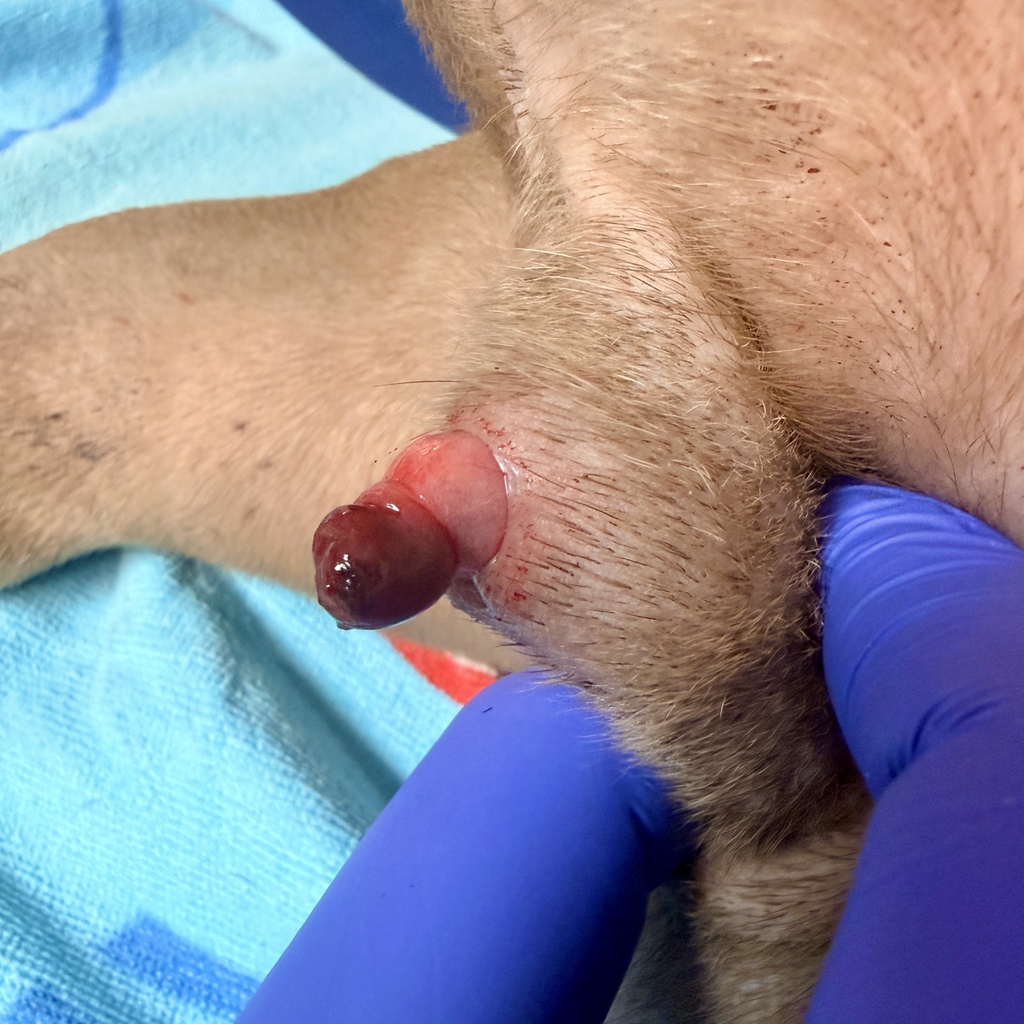
Urethral prolapse in dogs occurs when the lining of the urethra (the tube that carries urine from the bladder to the outside of the body) protrudes through the opening at the tip of the penis. It most commonly affects young, intact male dogs and can look like a small, red to purple, moist mass at the tip of the penis.
Common Clinical Signs:
- A red or purple swelling at the penile tip
- Blood dripping from the penis, especially after urination or excitement
- Excessive licking of the genital area
- Straining during urination
Why Are Brachycephalic Breeds at Higher Risk?
Brachycephalic breeds—dogs with shortened skulls and flat faces such as Bulldogs, Boston Terriers, and Pugs—are overrepresented in cases of urethral prolapse. This connection is not coincidental and is linked to their unique anatomy and physiology.
The Influence of Brachycephalic Airway Conformation
Brachycephalic breeds often suffer from brachycephalic airway syndrome, a collection of upper airway abnormalities (stenotic nares, elongated soft palate, hypoplastic trachea). These conditions increase airway resistance and make breathing more difficult. As a result:
- Dogs must generate greater negative pressure when breathing.
- This increased effort leads to higher abdominal pressure and vascular congestion, particularly in the pelvic and genital areas.
- Over time, this congestion contributes to the protrusion of urethral tissue.
The Role of Testosterone
Most cases occur in young intact males, highlighting the role of testosterone:
- Testosterone drives sexual behavior, increasing episodes of penile erection and protrusion.
- It also enhances vascular supply to the genital tissues, further predisposing them to prolapse.
- Castration (neutering) significantly reduces recurrence risk by lowering testosterone levels.
Diagnosis of Urethral Prolapse
Veterinarians typically make the diagnosis based on physical examination of the penis. Additional diagnostics may include:
- Urinalysis to rule out infection or blood in the urine
- Cytology or biopsy if there is concern for tumors (rare but possible)
- Airway evaluation in brachycephalic breeds, since airway disease is an underlying factor
Treatment Options
Treatment depends on the severity of the prolapse, whether it is recurrent, and the dog’s breeding status.
1. Medical Management
- Sedation and reduction: In mild, first-time cases, a veterinarian may manually replace the prolapsed tissue and use topical anti-inflammatory or lubricating medications.
- This is rarely a long-term solution as recurrence is common, especially in intact males.
2. Surgical Management
- Urethropexy: The prolapsed tissue is sutured back into its normal position. This is the most common surgical technique.
- Excision of prolapsed tissue: In severe cases, the protruding tissue may be removed surgically. Care is taken to preserve urethral function.
3. Castration (Neutering)
- Strongly recommended to reduce testosterone influence and prevent recurrence.
- Neutering is often performed at the same time as corrective surgery.
4. Addressing Airway Abnormalities
- In brachycephalic breeds, correcting airway problems (such as widening stenotic nares or shortening an elongated soft palate) helps reduce the straining and vascular congestion that contribute to prolapse.
- Treating airway disease improves breathing, quality of life, and lowers recurrence risk.
Prognosis
With appropriate surgical correction and neutering, the prognosis for dogs with urethral prolapse is good. Dogs can go on to live normal, healthy lives with minimal risk of recurrence. However:
- Intact males that are not neutered have a much higher risk of recurrence.
- Dogs with untreated brachycephalic airway syndrome may continue to strain, increasing risk for further issues.
Key Takeaways for Dog Owners
- Urethral prolapse is most common in young, intact, brachycephalic male dogs.
- Testosterone and brachycephalic airway syndrome are major contributors.
- Surgical treatment, often combined with neutering and airway surgery, offers the best long-term outcome.
- Early veterinary evaluation is critical if you notice swelling, bleeding, or excessive licking at the tip of your dog’s penis.
✅ If your dog is showing signs of urethral prolapse, schedule a veterinary exam immediately. Prompt treatment prevents complications and ensures your dog’s comfort and well-being.